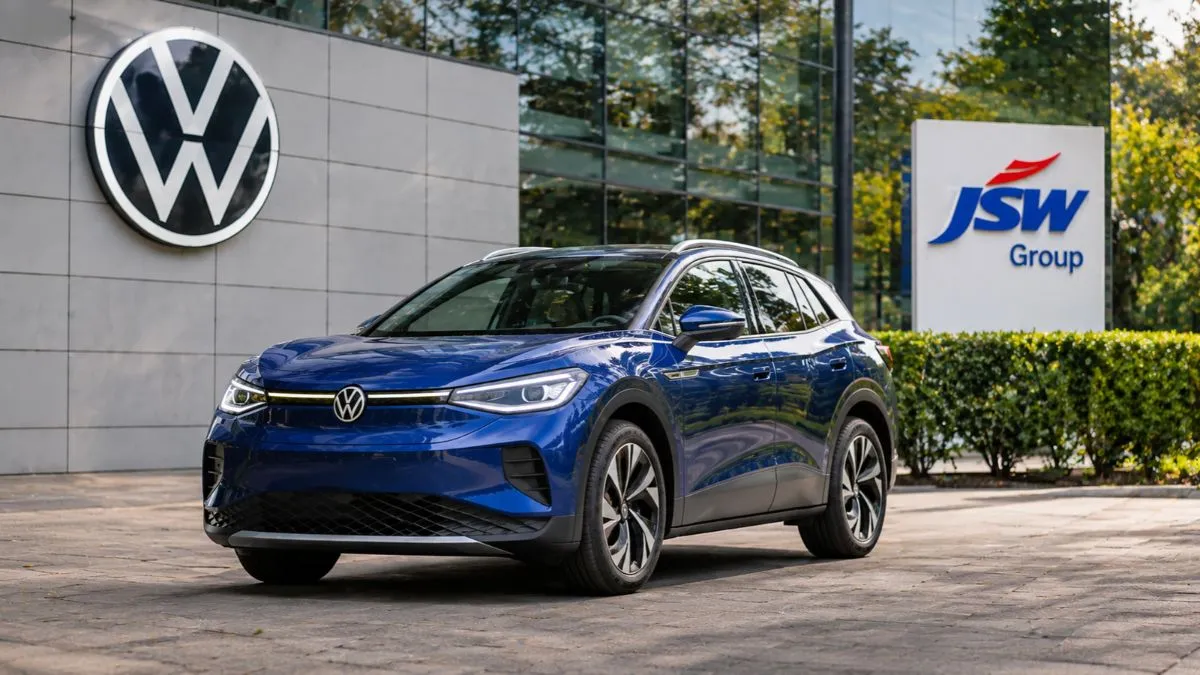
The Volkswagen India EV investment pause has put the German automaker’s electric vehicle plans for the Indian market on hold while JSW Group partnership negotiations continue.
Highlights
- The Volkswagen India EV investment pause means the automaker has frozen further investment in its India electric-vehicle programme pending greater clarity on its proposed partnership with JSW Group, according to The Economic Times
- The move affects planned locally assembled EVs under both Volkswagen and Skoda brands — but this is a pause, not a cancellation of India EV plans
- Indian buyers watching for affordable VW or Skoda electric cars should expect delays until the JSW joint venture structure is finalised, reportedly targeted before mid-2027
Follow TrendPulse360 for real-time EV news, reviews, and buying guides.
What Volkswagen Has Paused — and Why
Volkswagen has frozen further direct investment in its India electric-vehicle programme, The Economic Times reported on 24 October 2026, confirming the Volkswagen India EV investment pause. The German automaker wants greater clarity on a potential partnership with JSW Group before committing additional capital. This is not a cancellation of Volkswagen’s India EV ambitions — it is a deliberate pause while both sides work through the commercial terms of what could become one of India’s largest automotive joint ventures.
The Volkswagen India EV investment pause comes as Volkswagen Group globally navigates a sweeping restructuring programme. The company is cutting global investment by approximately 15 percent to just over €130 billion over five years, reducing up to 100,000 jobs by 2030, and halving its vehicle model lineup, according to Reuters. Rising competition from Chinese EV manufacturers, a 30 percent cost gap with rivals, declining sales in China, and rising US tariffs are driving these cuts.
Against that backdrop, every new market commitment — including India — is being evaluated with sharper financial discipline.
The JSW Partnership: What We Know
Understanding the Volkswagen India EV investment pause requires looking at the proposed JSW Group deal in detail.
Skoda Auto Volkswagen India Private Limited (SAVWIPL) and JSW Group signed a non-binding Memorandum of Understanding (MoU) outlining a proposed 51:49 joint venture, with JSW Group holding the majority stake.
| Detail | Status |
|---|---|
| Partnership structure | Proposed 51:49 JV (JSW majority) |
| Agreement type | Non-binding MoU signed |
| Target for final agreement | Before mid-2027 (reported, not confirmed) |
| Planned vehicles | Two locally assembled BEVs |
| Brands involved | Volkswagen and Skoda |
| Vehicle platform | CMP 21-based low-cost EV architecture |
| Vehicle launch timeframe | Within two years of finalising operations |
| Current investment status | Paused pending partnership clarity |
Both sides reportedly aim to finalise the definitive agreement before mid-2027. The partnership scope extends beyond vehicle assembly to include joint purchasing, localisation, research and development, product rollouts, and dealership expansion.
Two manufacturing sites are under evaluation. JSW has offered its JSW Motors plant in Chhatrapati Sambhajinagar, Maharashtra, and the JSW-MG Motor facility in Halol, Gujarat.
This has not been officially confirmed by Volkswagen Group or JSW Group through a formal joint statement. The details above are based on multiple reports from The Economic Times, Seeking Alpha, and automotive trade publications.
Why the JSW Partnership Matters for India
JSW Group is not a passive investor. Through JSW MG Motor, the conglomerate already holds a 15.0 percent share of India’s passenger EV market as of September 2026, according to Auto Punditz — making it the country’s third-largest EV seller behind Tata Motors (42.2 percent) and Mahindra & Mahindra (22.2 percent).
A Volkswagen-JSW joint venture would give the German automaker immediate access to existing EV manufacturing infrastructure, an established dealer and service network through JSW MG Motor’s presence, and a local partner that understands India’s cost-sensitive EV market.
For JSW, the deal would bring Volkswagen’s global engineering, the CMP 21 low-cost EV platform originally developed for China, and two internationally recognised brands — Volkswagen and Skoda — to add to its portfolio alongside MG Motor.
Who Is Affected
Indian EV buyers affected by the Volkswagen India EV investment pause face a longer wait for affordable Volkswagen or Skoda electric cars. No vehicle launch timeline is firm until the partnership deal is signed.
Tata Motors and Mahindra continue to dominate India’s EV market without a credible mass-market European competitor. The Volkswagen India EV investment pause gives both more runway to consolidate their positions.
JSW Group has significant assets committed to this potential deal — two manufacturing facilities offered, an existing EV sales operation through MG Motor, and strategic ambitions in India’s automotive sector. The longer the Volkswagen India EV investment pause continues, the more JSW’s planning timeline is affected.
Volkswagen’s existing India operations, unaffected by the Volkswagen India EV investment pause, under SAVWIPL — which builds and sells Volkswagen Taigun, Virtus, and Skoda Kushaq, Slavia — continue independently. The pause applies to new EV-specific investment only.
Analysis: What This Means for India’s EV Market
The Volkswagen India EV investment pause signals that the company is applying the same financial caution to India that it is applying globally. The company’s worldwide restructuring — cutting planned investment by approximately 15 percent to just over €130 billion over five years — means every new market entry must pass a higher bar for return on investment.
India’s EV market is growing fast. September 2026 passenger EV registrations reached approximately 35,048 units, up 95.4 percent year-on-year, according to Auto Punditz. But the market remains dominated by domestic players. Tata Motors alone sells more EVs in India than all other manufacturers combined.
Beyond the Volkswagen India EV investment pause itself, the commercial question is straightforward for Volkswagen: can it build EVs in India at a price point that competes with Tata Nexon EV, Mahindra XEV series, and the growing Chinese competition — while still generating acceptable margins?
The CMP 21 platform, adapted from China’s cost-efficient EV manufacturing base, is designed to answer that question. But until Volkswagen and JSW agree on who pays for what, how much localisation is required, and what the target price points are, the German automaker is choosing to wait rather than spend.
This is commercially rational. It is also a reminder that India’s EV market — despite its rapid growth — still requires manufacturers to accept thin margins and high localisation costs to compete.
What Indian EV Buyers Should Watch Next
Following the Volkswagen India EV investment pause, the most important milestone is whether Volkswagen and JSW Group sign a definitive agreement before mid-2027. If that deal closes, two locally assembled electric vehicles — one Volkswagen, one Skoda — could arrive within two years, potentially by 2029.
If the deal stalls or collapses, Volkswagen’s India EV entry could be delayed further, potentially leaving the company without an electric offering in one of the world’s fastest-growing EV markets.
Given the Volkswagen India EV investment pause, buyers currently considering an EV purchase should not wait for Volkswagen. Tata Motors, Mahindra, Hyundai, and JSW MG Motor all have electric vehicles available today.
Quick Answer
- Is Volkswagen cancelling its India EV plans? No. The Volkswagen India EV investment pause is temporary — Volkswagen has paused further investment while it works out the terms of a proposed joint venture with JSW Group. The partnership, vehicle plans, and manufacturing discussions are ongoing.
- When will Volkswagen launch an EV in India? No confirmed date. If the JSW partnership is finalised before mid-2027 as reported, two locally assembled EVs could arrive within two years — potentially by 2029.
- Should Indian buyers wait for a Volkswagen EV? Not right now. Multiple affordable electric vehicles from Tata Motors, Mahindra, Hyundai, and MG Motor are already available. Watch for the JSW deal outcome before planning around a Volkswagen EV.
Why has Volkswagen paused its India EV investment?
The Volkswagen India EV investment pause reflects the company’s need for greater clarity on its proposed joint venture with JSW Group before committing additional capital. The company is also undergoing a global restructuring that includes cutting total investment by approximately 15 percent, which means every new market commitment faces tighter financial scrutiny.
What vehicles is Volkswagen planning to launch in India as EVs?
Reports indicate two locally assembled battery-electric vehicles — one under the Volkswagen brand and one under the Skoda brand — built on the CMP 21 low-cost EV platform adapted from China. Specific model names, prices, and specifications have not been officially confirmed.
How does this affect Volkswagen’s existing cars in India?
It does not. Skoda Auto Volkswagen India Private Limited (SAVWIPL) continues to manufacture and sell its existing internal combustion engine lineup — including the Volkswagen Taigun, Volkswagen Virtus, Skoda Kushaq, and Skoda Slavia — independently of the EV investment decision.
Related Articles
Reviews:
- Tata Nexon EV 2026 Long Range Review: Real-World Range and Ownership Verdict
- Mahindra XEV 9e Review: Can It Challenge Tata in India’s EV Market?
Comparisons:
- Tata Nexon EV vs MG ZS EV vs Mahindra XUV400: Which Affordable Indian EV Should You Buy?
- Volkswagen Taigun vs Skoda Kushaq 2026: Which SAVWIPL SUV Is the Better Buy?
Buying Guide:
- Best Electric Cars in India Under ₹20 Lakh: 2026 Buying Guide
External Authority Sources:
Verification Note: Key claims in this article are based on reporting by The Economic Times (24 October 2026) and corroborated by Seeking Alpha via TradingView (23 October 2026). Readers should verify partnership details and vehicle launch timelines against official statements from Volkswagen Group (volkswagen-group.com) and JSW Group (jsw.in) as the deal progresses.

Chetan Patil is the Founder, Editor & Publisher of TrendPulse360, covering automotive news, EV technology, and mobility trends. With over five years of experience researching automotive markets and digital publishing, he focuses on accurate, reader-first coverage of vehicle launches, reviews, and buying guides, and oversees editorial standards and fact-checking across the site.