
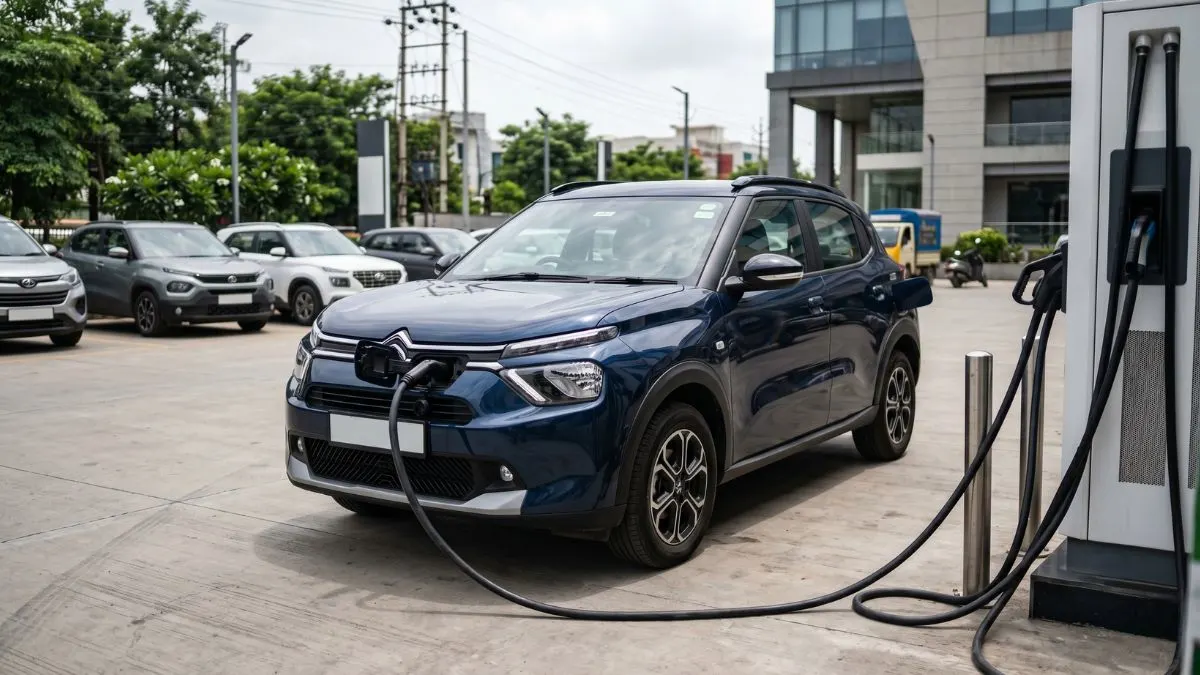
Citroen eC3X BaaS vs Outright: The Break-Even Mileage Buyers Need to Know
- Citroen’s eC3X BaaS scheme cuts the upfront price by ₹3.36 lakh — but the break-even point against outright purchase is roughly 1,48,670 km, far higher than most buyers will ever drive.
- This affects anyone cross-shopping a budget EV in India who’s tempted by the lower BaaS sticker price without working out the long-term math.
- Unless you’re covering exceptionally high monthly mileage, BaaS comes out cheaper over realistic ownership periods — but a single-sourced minimum monthly payment claim could change that, and it isn’t officially confirmed yet.
Follow TrendPulse360 for real-time EV news, reviews, and buying guides.
Who This Guide Is For
This is for anyone deciding between the Citroen eC3X’s two purchase paths: paying ₹10.25 lakh ex-showroom outright, or paying ₹6.89 lakh upfront and renting the battery at ₹2.26 per km under Citroen’s Battery-as-a-Service scheme.
The lower BaaS price looks like the obvious choice on paper. Whether it actually is depends entirely on how many kilometres you drive.
The Two Purchase Paths: Side by Side
| Path | Upfront Price | Ongoing Cost | Best For |
|---|---|---|---|
| Outright Purchase | ₹10.25 lakh | None (battery owned) | High-mileage, long-term owners |
| Battery-as-a-Service (BaaS) | ₹6.89 lakh | ₹2.26/km battery rental | Typical city driving |
The Break-Even Calculation
The price gap between the two paths is ₹3,36,000 (₹10.25 lakh minus ₹6.89 lakh). Every kilometre you drive under BaaS costs an extra ₹2.26 in rental that an outright owner doesn’t pay.
Divide the price gap by the per-km rate: ₹3,36,000 ÷ ₹2.26 = approximately 1,48,670 km. That’s the total distance you’d need to drive before the BaaS rental fees add up to more than the ₹3.36 lakh you saved upfront.
Spread across common ownership periods, that works out to roughly:
- 3-year ownership: ~4,130 km/month to hit break-even
- 5-year ownership: ~2,480 km/month to hit break-even
- 8-year ownership (typical EV battery warranty horizon): ~1,550 km/month to hit break-even
What to Look for Before Choosing a Path
Before picking outright or BaaS, work out your own realistic monthly mileage — not your best-case estimate. Check your last 6–12 months of driving if you’re switching from an existing car.
Also confirm with your dealer whether any minimum monthly rental charge applies to the BaaS scheme, since this isn’t yet confirmed at the manufacturer level and could change the math below.
Best Pick by Mileage Profile
Under ~1,500–2,500 km/month (most urban and suburban drivers): BaaS is very likely the cheaper path over a typical 5–8 year ownership period.
Above ~4,000 km/month (heavy daily commuters, intercity drivers): Outright purchase is worth running through your own numbers, since you may cross the break-even point within a few years.
Analysis: What This Means for Buyers
Average car usage in India is often cited around 12,000–15,000 km a year, or roughly 1,000–1,250 km a month. Industry estimate — not officially confirmed.
If that range is broadly representative of how you’d use the car, you’d need to drive well above typical usage — and sustain it for years — before outright purchase becomes the cheaper path. For most urban and suburban driving patterns, BaaS keeps total cost of ownership lower than outright purchase, not just the upfront price.
The Unconfirmed Variable That Could Change This
One source reports a mandatory minimum BaaS payment equivalent to 2,000 km/month. This has not been officially confirmed by Citroen, and no second source corroborates it.
If a minimum payment of that size does apply, it would raise the effective monthly cost of BaaS for low-mileage drivers specifically — the exact buyers the scheme is otherwise best suited to. Until Citroen’s official press kit or a second independent source confirms or denies this, treat the break-even numbers above as the uncomplicated case.
How the eC3X Compares on BaaS Terms
Maruti’s e Vitara offers a similar BaaS structure, but on meaningfully worse terms: ₹10.99 lakh upfront plus ₹3.99/km, compared to the eC3X’s ₹6.89 lakh plus ₹2.26/km. At any given mileage, the eC3X’s BaaS scheme costs less in rental and far less upfront.
The Tata Punch EV and Tata Tiago EV don’t offer a BaaS path at all — they’re outright-purchase-only, which makes them a more direct comparison for buyers who’ve already decided against any battery-rental structure.
Common Mistake to Avoid
Buyers often compare BaaS purely on the upfront price gap and stop there. The upfront saving is real, but it’s not the full picture — the per-km rental fee is the variable that determines whether BaaS stays cheaper over your actual ownership period. Run your own expected mileage through the math above before deciding.
Quick Answer
- BaaS is cheaper than outright purchase up to roughly 1,48,670 total km driven — well beyond typical usage for most owners.
- For 5-year ownership, that’s about 2,480 km/month; most drivers fall well under this.
- A single-sourced, unconfirmed minimum BaaS payment claim could affect low-mileage buyers — verify with Citroen before relying on it.
Is the Citroen eC3X BaaS scheme cheaper than buying outright?
For most typical driving patterns, yes — the break-even point is around 1,48,670 km, which exceeds what most owners drive within a realistic ownership period. Very high-mileage drivers may find outright purchase cheaper over several years.
How much does the Citroen eC3X BaaS scheme cost per km?
The battery rental fee is ₹2.26 per km, on top of a reduced upfront price of ₹6.89 lakh, based on figures confirmed by Autocar India and Motorbeam.
Is the Citroen eC3X BaaS scheme better than Maruti e Vitara’s?
Yes, on both metrics. The eC3X’s BaaS terms (₹6.89 lakh + ₹2.26/km) are cheaper upfront and per kilometre than the e Vitara’s (₹10.99 lakh + ₹3.99/km), per GaadiKey.
External Sources
Verify current pricing and BaaS terms directly via Citroen India’s official website before making a purchase decision.

Chetan Patil is the Founder, Editor & Publisher of TrendPulse360, covering automotive news, EV technology, and mobility trends. With over five years of experience researching automotive markets and digital publishing, he focuses on accurate, reader-first coverage of vehicle launches, reviews, and buying guides, and oversees editorial standards and fact-checking across the site.